

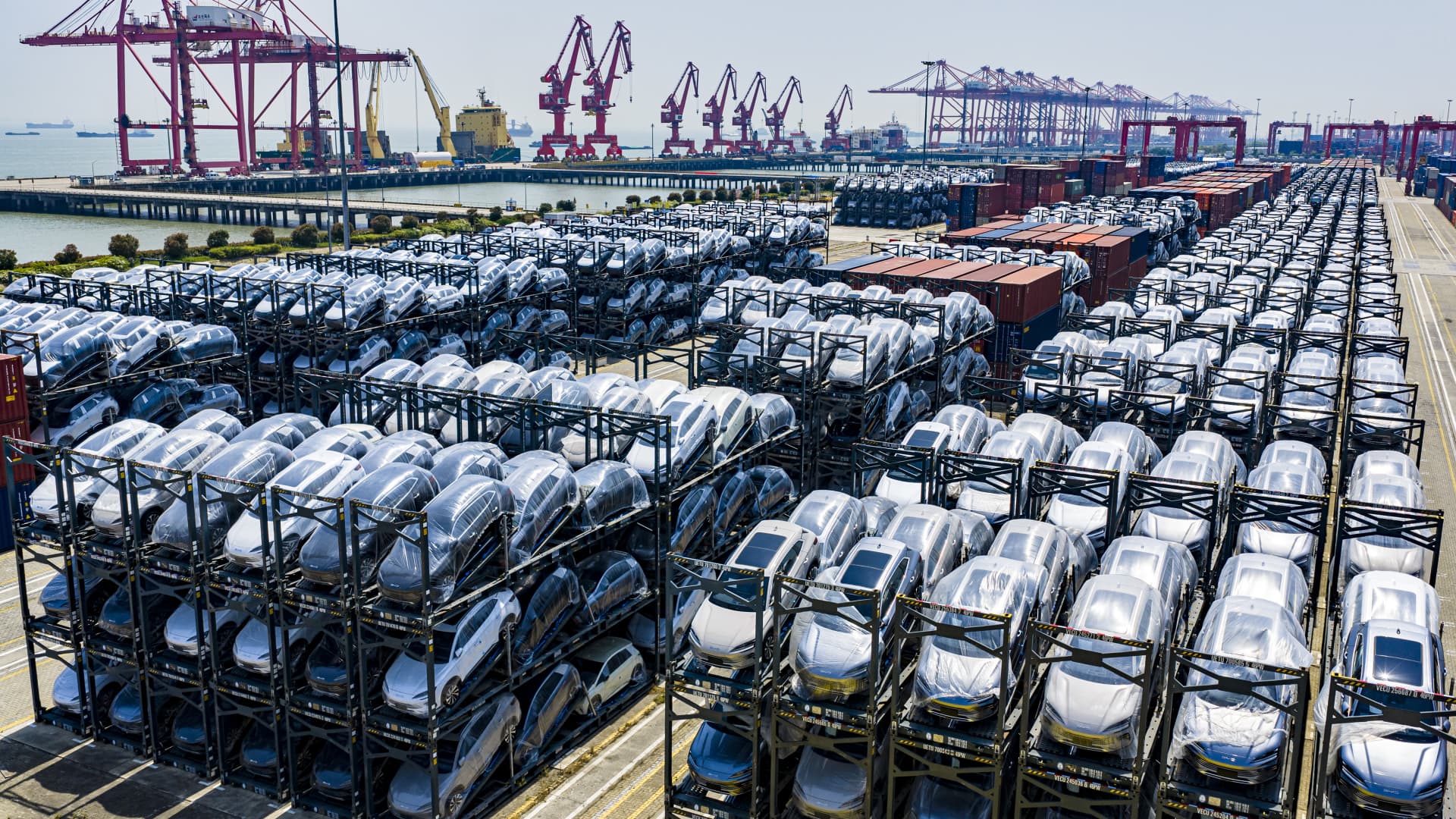
The United States is embarking on an ambitious and strategically critical mission: to drastically reduce its dependence on China for the vital batteries powering everything from electric vehicles (EVs) to grid-scale energy storage. This endeavor, highlighted by reports from outlets like CNBC, is driven by a complex mix of economic security, national security, and supply chain resilience concerns. However, the path to decoupling is fraught with significant hurdles, illustrating the entrenched dominance China has built over decades.
China's Unrivaled Dominance: A Global Battery Powerhouse
For years, China has meticulously cultivated an unrivaled position across the entire battery supply chain. Its grip extends far beyond just manufacturing finished battery cells; it encompasses critical upstream stages that are notoriously difficult to replicate quickly:
- Raw Material Refining: China processes a staggering majority of the world's lithium, cobalt, graphite, and nickel – essential minerals for modern batteries. Even if raw ore is mined elsewhere, it often goes to China for refinement into battery-grade materials.
- Component Manufacturing: Key components like cathodes, anodes, separators, and electrolytes are predominantly produced in China. These specialized materials require immense capital investment and sophisticated chemical engineering expertise.
- Cell Production: Chinese companies like CATL and BYD are global leaders in battery cell manufacturing, benefiting from economies of scale, mature supply chains, and extensive governmental support.
This comprehensive control means that virtually every EV battery produced globally, regardless of the final assembly location, has significant ties to China. Breaking this nexus requires a complete overhaul of established industrial processes and a massive injection of capital and expertise.
U.S. Strategy: Incentives and Investment
Recognizing the urgency, the U.S. government has launched a multi-pronged strategy, primarily anchored by landmark legislation:
- The Inflation Reduction Act (IRA): This act offers substantial tax credits for EVs assembled in North America that utilize batteries with a high percentage of components and critical minerals sourced from the U.S. or its free trade partners. The aim is to create powerful demand-side incentives for domestic manufacturing.
- The Bipartisan Infrastructure Law: This law provides billions in funding for battery material processing, manufacturing, and recycling facilities within the U.S., focusing on building out the supply chain's foundational elements.
Private industry has responded with significant investment announcements. Automakers like GM, Ford, and Stellantis, alongside battery makers such as LG Energy Solution, SK On, and Panasonic, are pouring billions into establishing gigafactories across states like Michigan, Georgia, Tennessee, and Nevada. There's also a burgeoning interest in developing domestic mining and refining capabilities, particularly for lithium and graphite.
The Steep Hurdles Ahead
1. The Time and Cost Conundrum
Building an entire industrial ecosystem from scratch is not an overnight task. Establishing new mines can take a decade or more, and constructing sophisticated refining plants or massive battery gigafactories requires years of planning, permitting, and construction. China's existing infrastructure and expertise give it a significant head start, making it difficult for U.S. companies to compete on cost in the short to medium term.
2. Environmental and Permitting Challenges
Mining and chemical processing are environmentally intensive activities. Proposed mining projects in the U.S. often face rigorous environmental reviews and local opposition, leading to significant delays or even cancellations. Balancing the need for domestic resource extraction with environmental protection is a delicate act.
3. Raw Material Scarcity and Geopolitical Competition
While the U.S. has reserves of critical minerals, it's not self-sufficient for all of them. Global competition for access to lithium from places like Australia and Chile, cobalt from the Democratic Republic of Congo, and nickel from Indonesia is fierce. China has spent years securing off-take agreements and investing directly in mines worldwide, complicating U.S. efforts to diversify its raw material sourcing.
4. Talent and Expertise Gaps
The U.S. needs to rapidly train a workforce capable of operating advanced battery manufacturing plants, chemical processing facilities, and innovative recycling operations. This requires significant investment in STEM education, vocational training, and attracting skilled professionals to the sector.
5. Technological Lag in Manufacturing Scale
While U.S. companies excel in battery research and development, China has become adept at rapidly scaling up manufacturing and iterating on production processes. Bridging this gap requires not only R&D but also a robust ecosystem for rapid commercialization and efficient high-volume production.
Looking Ahead: A Marathon, Not a Sprint
The U.S. drive to reduce battery reliance on China is a strategic imperative with long-term implications for its economy and national security. While significant progress is being made in attracting investment and laying foundational infrastructure, the journey will be protracted and challenging. Success hinges on sustained political will, consistent investment, technological innovation, and a pragmatic approach to building a diversified, resilient battery supply chain that may not entirely eliminate, but significantly reduce, critical dependencies on any single nation. The goal isn't necessarily complete self-sufficiency but rather strategic independence and flexibility.
Login to leave a comment.