

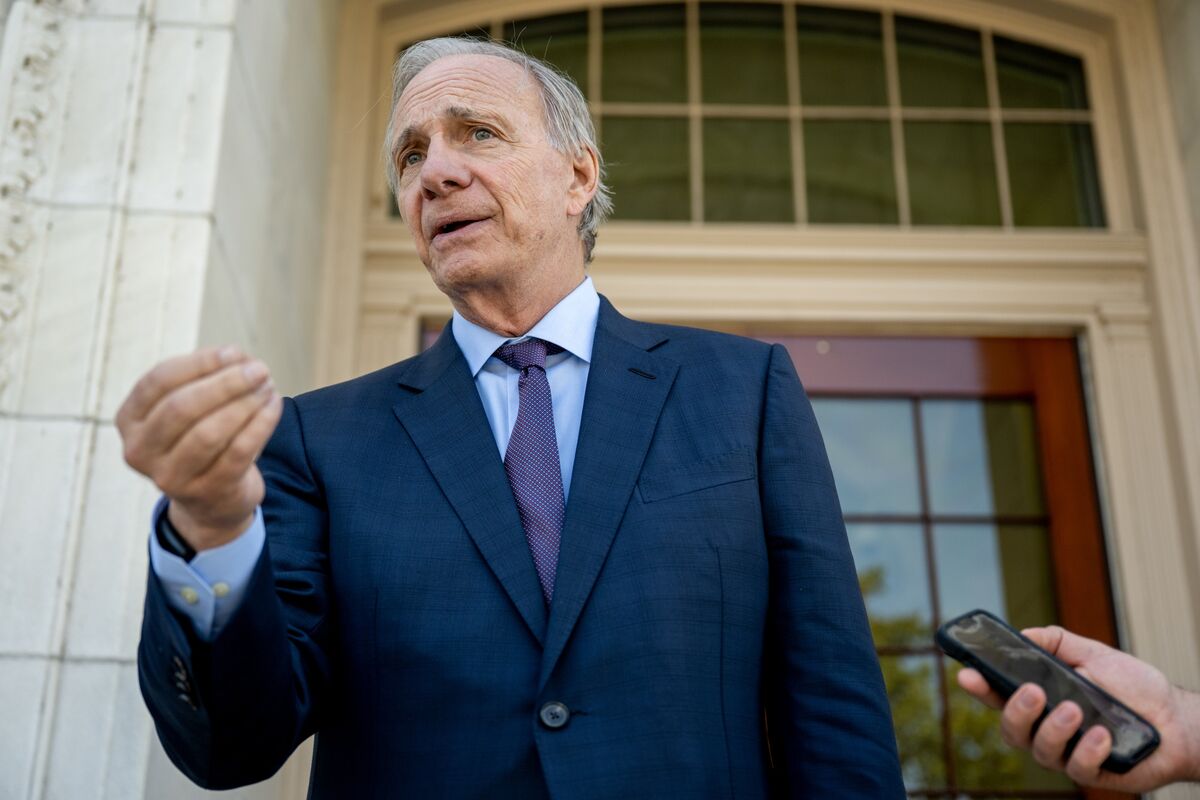
Billionaire investor Ray Dalio, the insightful founder of Bridgewater Associates, has issued a potent warning regarding the long-term stability of the US dollar's dominance and the future demand for US government debt. Drawing attention to escalating geopolitical tensions and a rapidly evolving global economic landscape, Dalio suggests that major foreign creditors, particularly China and Japan, may increasingly opt to reduce their significant holdings of US Treasuries. This potential strategic shift, initially highlighted by Bloomberg, carries profound implications for global finance, the US economy, and the entrenched international financial order.
The Geopolitical Chessboard and De-dollarization
Dalio's concerns are not born out of thin air but are deeply rooted in a confluence of macroeconomic and geopolitical factors. Central to his argument is the unprecedented level of US national debt, which, when coupled with persistent budget deficits, raises serious questions about long-term fiscal sustainability. Beyond domestic fiscal health, Dalio points to the increasingly frequent "weaponization" of the dollar and financial sanctions, as seen most notably against Russia. This strategy, while effective in achieving foreign policy objectives, simultaneously incentivizes other nations, especially those with strained relations with the US, to seek alternatives and lessen their reliance on US financial instruments.
This pursuit of alternatives fuels a gradual but persistent trend of "de-dollarization." Dalio frames this within his broader "Big Cycles" theory, where the rise and fall of empires and their reserve currencies are a natural progression over centuries. He posits that the current period is indicative of such a transition, where countries are increasingly weighing geopolitical risks alongside traditional financial returns, recalibrating their foreign reserve strategies.
China's Strategic Rethink
China, which remains the second-largest foreign holder of US Treasuries, has already demonstrated a subtle, yet consistent, reduction in its holdings over recent years. Dalio's analysis suggests that Beijing's motivations are multifaceted and strategic. Economically, China aims to diversify its vast foreign exchange reserves, reducing its exposure to US assets amidst ongoing trade tensions and broader strategic competition. This diversification is not merely about financial prudence but also about enhancing its own strategic autonomy.
Geopolitically, a significant reduction in Treasury holdings could serve as both leverage and a defensive measure against potential future sanctions or economic pressures. Furthermore, China's aggressive efforts to internationalize the yuan, develop its own cross-border payment systems, and foster alternative financial infrastructure clearly signal a long-term strategy to diminish its dependence on the dollar-centric global financial system. For Beijing, reducing Treasury exposure is a component of a larger strategy to reshape the global financial order to better reflect its growing economic and political power.
Japan's Domestic Imperatives
Japan, historically the largest foreign holder of US Treasuries, presents a different, albeit equally significant, set of considerations. Unlike China, Tokyo's potential pullback is less about direct geopolitical confrontation and more about intricate domestic economic imperatives. The Bank of Japan's ultra-loose monetary policy, particularly its yield curve control mechanism designed to combat persistent deflation, has created unique pressures on domestic bond yields.
As global interest rates continue to climb, and with Japan facing its own substantial domestic debt obligations and an aging population, its financial institutions and the central bank might increasingly find it attractive to repatriate capital or invest in alternative assets. Such moves could be driven by the need to meet domestic funding requirements, stabilize the yen against rapid fluctuations, or simply pursue optimal risk-adjusted returns in a changing global interest rate environment. Dalio emphasizes that Japan's decisions would primarily stem from financial prudence and the pursuit of national economic stability, rather than strategic rivalry.
The Ripple Effect on the US Economy
Should China and Japan significantly curtail their purchases or, more dramatically, begin to sell substantial quantities of US Treasuries, the repercussions for the United States could be profound and far-reaching. Such a scenario would likely lead to notably higher US bond yields, as the US government would be compelled to offer more attractive rates to entice other buyers – both domestic and international – to finance its burgeoning debt. Higher yields translate directly into increased borrowing costs for the US government, but also for businesses and consumers, potentially dampening economic growth by making mortgages, corporate loans, and other forms of credit more expensive.
Moreover, a reduced foreign appetite for Treasuries could exert downward pressure on the US dollar's exchange rate. A weaker dollar would exacerbate imported inflation, making foreign goods and services more expensive for American consumers and businesses, thereby eroding purchasing power. While not an immediate collapse, a sustained weakening of demand could incrementally chip away at the dollar's status as the world's primary reserve currency, a shift that Dalio has frequently warned about as a hallmark of an empire in transition.
A Nuanced Threat, Not an Overnight Catastrophe
It's crucial to understand that Dalio's warning points to a gradual, strategic evolution rather than an abrupt, catastrophic sell-off. An immediate "dump" of US Treasuries by China or Japan is largely considered unlikely by most market analysts, primarily because of the immense market disruption it would cause, impacting the value of their remaining holdings and potentially destabilizing the global financial system, to their own detriment. Instead, the concern lies in a sustained reduction in their appetite for new US debt, or a gradual rebalancing of their portfolios over time.
This subtle but persistent shift, Dalio argues, could steadily erode the US's ability to finance its debt cheaply and maintain the dollar's unchallenged supremacy in global finance. Policymakers in Washington, D.C., and global financial centers are thus increasingly compelled to seriously consider the implications of these evolving dynamics, recognizing that the financial decisions made in Beijing and Tokyo could fundamentally reshape the future of global capital flows and power structures for decades to come.
Login to leave a comment.