

Nepal, a stunning nation tucked between China and India, is well-known throughout the world for its kind people, spiritual culture, and majestic Himalayas. However, Nepal made news for a completely other reason in September 2025. The Gen Z Protests were one of the biggest youth-led demonstrations in the country's history.
There was more to these protests than social media. They were about freedom, corruption, and the rights of a whole generation that thinks its leaders have abandoned them. A prime minister was overthrown, the administration was rocked, and a potential new era was ushered in.
From the beginnings of the crisis to the most recent developments, this blog walks you through Nepal's developing story and speculates on what the Himalayan republic may face in the future.
Riot police deployed to halt tens of thousands of supporters of Nepal’s former king calling for the restoration of the monarchy and the nation's former status as a Hindu state pic.twitter.com/9cDTTcMeb7
— RT (@RT_com) November 24, 2023
Why Are Nepal’s Youth Protesting?
In early September 2025, the Nepali government banned 26 social media platforms (including Facebook, Instagram, WhatsApp, and X/Twitter).
- According to officials, this was done to compel businesses to register locally and to cease "undesirable content."
- However, the young people of Nepal, who work, study, and live online, perceived this as a clear violation of their right to free speech.
- According to officials, this was done to compel businesses to register locally and to cease "undesirable content."
The ban became the breaking point in a society already frustrated by:
- Years of government corruption and nepotism.
- Insufficient employment and prospects for youth.
- Ineffective leadership and a lack of accountability.
From Peaceful March to Bloody Crackdown
Marches that started off peacefully swiftly descended into violent altercations.
Thousands of young people took to the streets of Kathmandu and other towns on September 8, 2025.
- Thousands of young people took to the streets of Kathmandu and other towns on September 8, 2025.
- Police even used live ammunition, rubber bullets, and tear gas.
- That day, at least 19 demonstrators lost their lives. Over 1,300 people were hurt, and the death toll increased to over 30 in the days that followed.
The world and the country were stunned by this ruthless crackdown. Human rights organizations charged Nepal's security personnel with abusing unarmed youth by employing disproportionate and illegal force.
The world was shocked when videos of police shooting at unarmed protestors went viral on the internet. The government of Nepal was charged by human rights organizations with grave transgressions of international law.
For the young people of Nepal, there was no going back. A revolution against injustice and corruption resulted from what started as a protest against a prohibition.

The Fall of the Government
The political establishment was thrown into a crisis by the deaths.
- After being under a lot of strain, Prime Minister K. P. Sharma Oli quit.
- Along with his resignation, Home Minister Ramesh Lekhak accepted moral responsibility.
- The social media restriction was promptly overturned by the government in an effort to quell the ire.
The demonstrations, however, continued. In addition to internet access, Gen Z was calling for a new political system.
What the Protesters Want
The Gen Z movement is powered by people, not by leaders. Among their primary demands are:
- Put an end to nepotism and corruption in public institutions and politics.
- Ensure the right to free expression both online and off.
- Accountability: punitive action against the murderers.
- Openness in government and equitable chances for everyone.
- A transitional administration run by trustworthy individuals rather than dishonest politicians.
This movement is not advocating for the repeal of the constitution, in contrast to previous ones. As an alternative, they seek democratic reforms with new faces and new vitality.
Possible Interim Leaders
Now, the crucial question is: Who will be in charge of Nepal throughout this change?
Among the well-known names are:
- Former Nepalese Chief Justice Sushila Karki. admired for their independence and honesty. She is viewed by many demonstrators as an impartial, non-political person.
- Balendra Shah, sometimes known as Balen, is the mayor of Kathmandu and is very well-liked by young people because of his straightforward, modern approach.
- Former Nepal Electricity Authority chief Kulman Ghising is renowned for putting an end to the nation's years-long power outages.
The army, political figures, and protest leaders are still in talks. Although a decision has not yet been made, Sushila Karki seems to be the most qualified applicant.
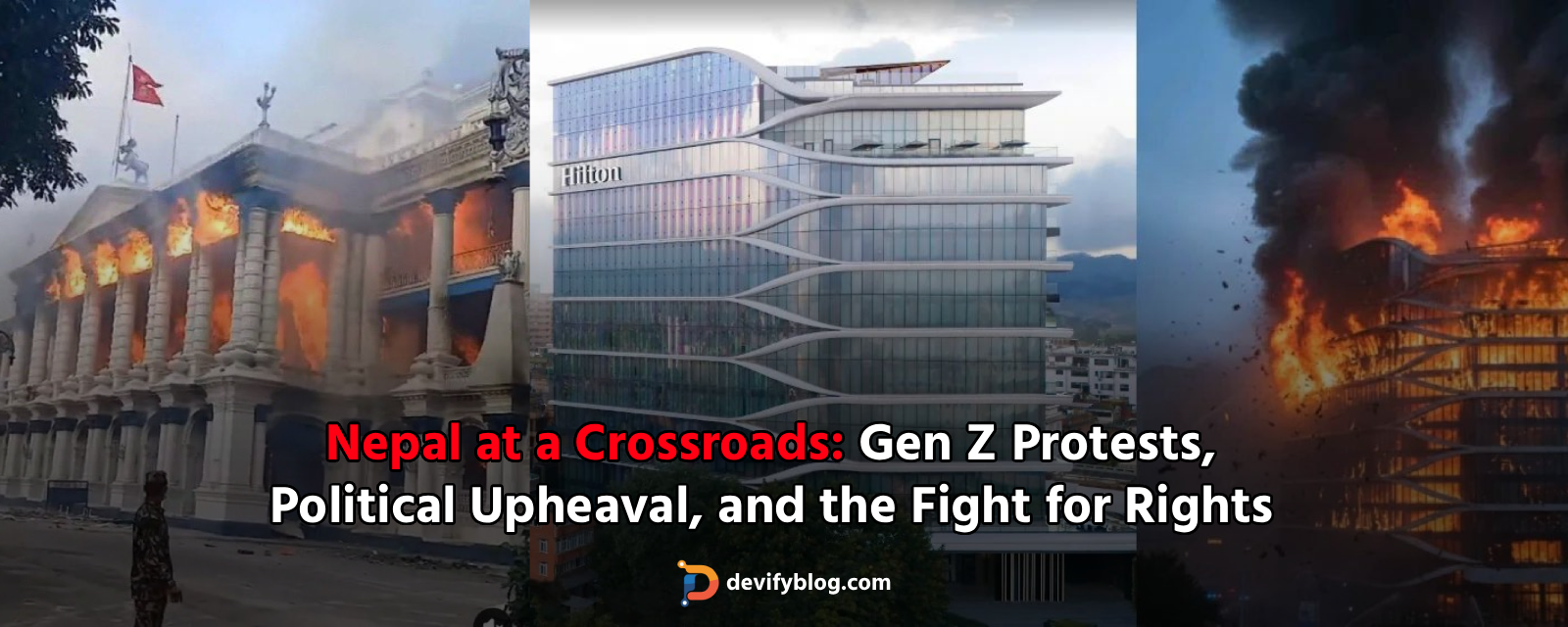
Nepal is currently experiencing a severe crisis as a result of the protests, which have disrupted daily life and stoked both optimism and terror. Curfews are still in effect in Kathmandu, Lalitpur, Bhaktapur, and other districts, over 13,000 prisoners broke out of jails during the turmoil, and government facilities, including the parliament, were attacked and burned down. Although companies, schools, and roads are still paralyzed, a new feeling of hope has grown as young people feel that their voices are finally influencing the destiny of the country. The world is paying close attention. The United Nations and Human Rights Watch have demanded probes into police brutality, and China and India, two powerful neighbors, are keeping a wary eye on the unrest due to its potential regional repercussions.
What Lies Ahead for Nepal?
Nepal is currently at a turning point. The political environment has already been altered by the Gen Z movement:
- It has disturbed the traditional political elite.
- The youth have demonstrated that they will not keep quiet.
- Previously prohibited, social media is increasingly being utilized to influence, inform, and organize leaders.
But the road ahead is full of challenges:
- Are demonstrators able to remain unified in their desire for change?
- Will a youth-backed interim leader be accepted by the army and political elite?
- Is it possible for Nepal to establish organizations that genuinely defend rights and combat corruption?
Nepal’s Gen Z protests are more than just a fight over social media. They are about the future of democracy in Nepal. A generation that has grown up with smartphones and global ideas is demanding a government that listens, serves, and respects its people.
Whether Nepal takes this chance to reform — or falls back into old cycles of corruption and instability — will define the country’s path for decades. One thing is clear: Nepal’s youth are not backing down.
Login to leave a comment.