


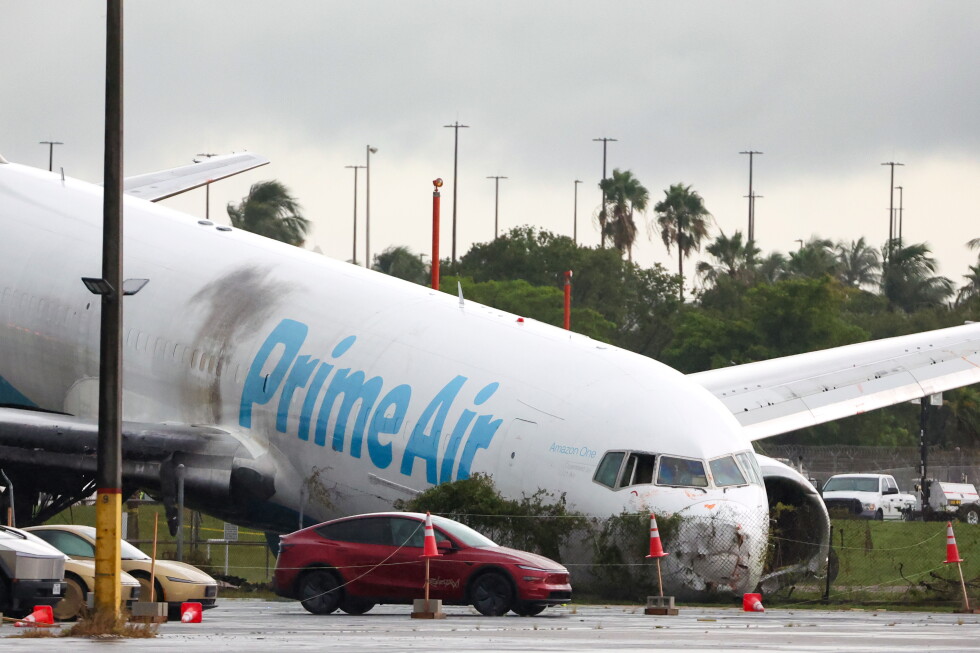
New flight data has unveiled a critical detail in the tragic crash of a cargo jet near Miami International Airport, indicating the aircraft attempted to abort an unsteady landing shortly before it plummeted to the ground. The incident, which claimed the lives of all five crew members aboard, is now the subject of an intense investigation, with this latest revelation shedding significant light on the final harrowing moments of the flight. This information, reported by AP News, points towards a desperate struggle to regain control and avert disaster.
The Unsteady Approach and Fatal Decision
Investigators probing the catastrophic cargo jet crash have confirmed that the aircraft was on an 'unstable' approach to Miami International Airport. An unsteady approach, characterized by deviations from the recommended flight path, airspeed, or descent rate, often necessitates a 'go-around' – a maneuver where pilots abort the landing and circle back for another attempt. Flight data recorders, commonly known as 'black boxes,' have reportedly shown that the crew initiated precisely such a maneuver, attempting to pull up and climb away from the runway.
However, despite this critical safety protocol being engaged, something went catastrophically wrong. The aircraft, instead of safely gaining altitude, crashed, resulting in the immediate loss of life. The question now at the forefront of the National Transportation Safety Board's (NTSB) inquiry is not just why the approach was unstable, but why the attempted go-around failed to prevent the tragedy.
Unraveling the 'Black Box' Secrets
The flight data recorder (FDR) and cockpit voice recorder (CVR) are proving indispensable in reconstructing the final minutes of the doomed flight. The FDR captures hundreds of parameters, including altitude, airspeed, engine performance, control surface positions, and pilot inputs. The CVR records all audio within the cockpit, offering insights into crew communications, alarms, and ambient sounds.
- Flight Data Recorder (FDR): Provides a precise timeline of the aircraft's performance and the crew's actions, confirming the go-around attempt.
- Cockpit Voice Recorder (CVR): Expected to reveal the crew's discussions, their assessment of the unsteady approach, and their decision-making process during the abort attempt.
Preliminary analysis from these recorders suggests that the crew recognized the precariousness of their landing conditions and made a professional decision to abort. The challenge for investigators now is to determine if the abort was initiated too late, if the aircraft encountered an unforeseen technical malfunction during the maneuver, or if other external factors played a role in preventing a successful recovery.
The Perils of Go-Arounds and Aviation Safety Protocols
Go-arounds are standard procedures in aviation, executed frequently when conditions are not optimal for landing. They are a testament to the rigorous safety protocols designed to prioritize passenger and crew safety above all else. However, executing a go-around, especially with a heavy cargo jet, is a complex maneuver that requires precise coordination and power management. Factors such as wind shear, sudden changes in runway conditions, or even misjudged approaches can lead to an unstable situation.
This incident raises crucial questions for aviation safety: Were there adequate safety margins for aborting a landing under those specific conditions? Was the crew adequately trained for this particular scenario? Could air traffic control have provided earlier warnings or alternative instructions?
Impact on the Cargo Industry and Miami Operations
Miami International Airport is a critical hub for cargo operations, handling a vast volume of freight traffic daily. The crash of a cargo jet and the subsequent investigation have significant implications for the industry. While such incidents are rare, they underscore the inherent risks faced by dedicated cargo pilots who often fly challenging routes and operate under tight schedules.
The loss of five lives is a profound tragedy, reverberating through the aviation community and beyond. The pilots and crew of cargo jets are the unsung heroes of global commerce, ensuring the timely delivery of goods across continents. Their commitment to their profession, even in the face of danger, is unwavering.
The Road Ahead for Investigators
The NTSB's investigation will be meticulous and exhaustive, involving forensic analysis of wreckage, examination of maintenance records, meteorological data, and air traffic control communications. Aviation accidents are rarely attributable to a single cause; more often, they result from a complex chain of events. The final report, which could take more than a year to complete, will aim to identify all contributing factors and issue safety recommendations to prevent similar tragedies in the future.
As the aviation world awaits further details, the revelation that the crew attempted to abort their landing before the Miami crash paints a picture of professionals fighting to the last moment. This insight, while tragic, is a vital piece of the puzzle, guiding investigators closer to understanding why this desperate attempt to save the aircraft and its occupants ultimately failed.
Login to leave a comment.