


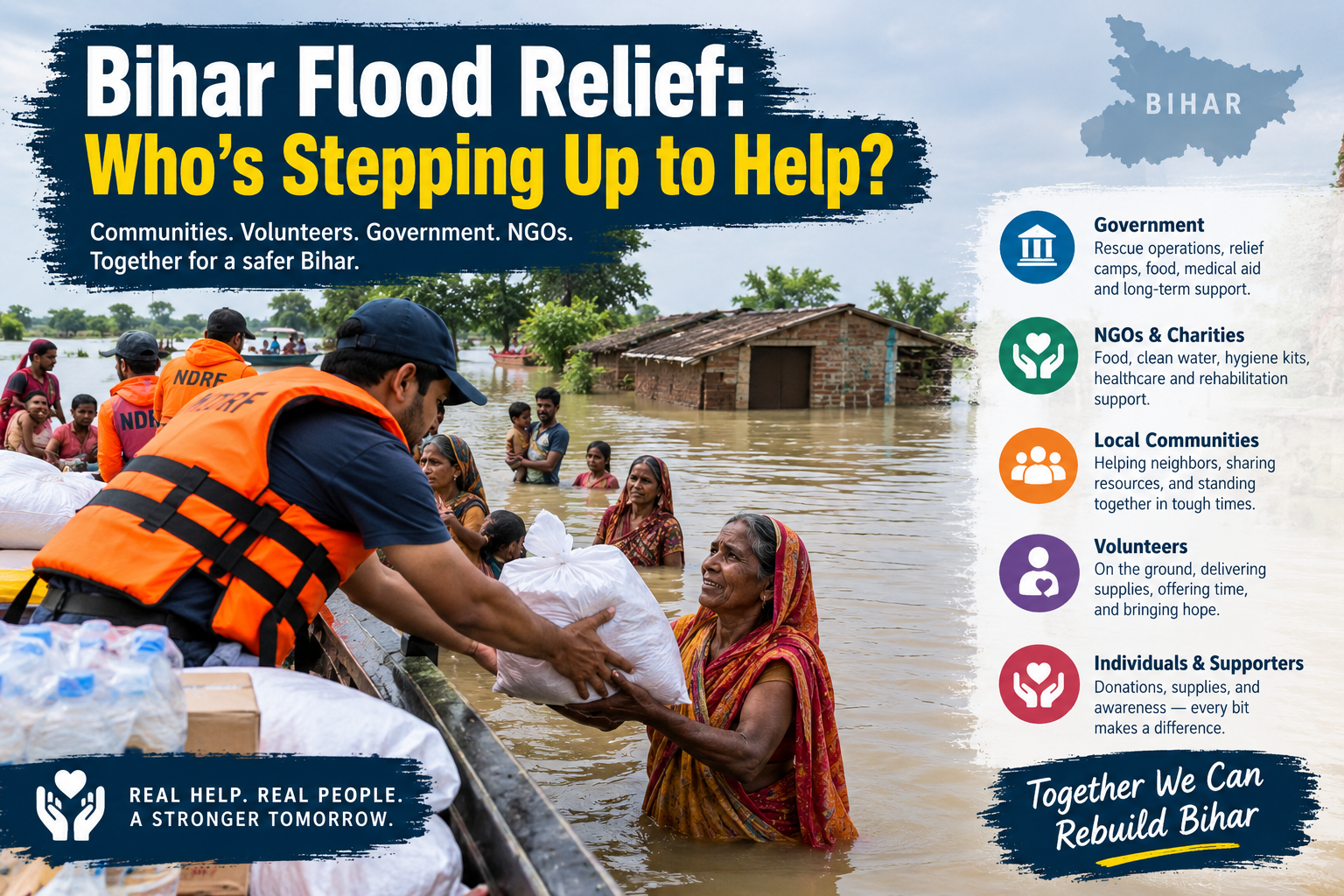
Bihar, a state perennially grappling with the devastating impacts of monsoon floods, relies heavily on a concerted effort from various stakeholders when disaster strikes. From immediate rescue operations to long-term rehabilitation, a robust network of government agencies, non-governmental organizations (NGOs), international bodies, local communities, and even individual volunteers steps forward to provide critical assistance. These collective Bihar flood relief efforts are vital for mitigating suffering, offering emergency aid, and supporting the arduous path to recovery for millions displaced and affected by the inundation.
- Core Insight: Bihar flood relief is a multi-faceted endeavor involving government, NGOs, international aid, local communities, and individuals.
- Actionable Step: Support verified organizations or local initiatives to ensure effective aid reaches flood-affected regions.
- Key Value: Understanding the diverse players in flood relief empowers better coordination and more impactful contributions during crises.
Understanding Bihar's Perennial Flood Challenge
Bihar's geographical location, crisscrossed by major rivers like the Kosi, Gandak, Bagmati, and Ganga, makes it particularly vulnerable to annual monsoon floods. These natural calamities displace millions, destroy homes, devastate agriculture, and disrupt livelihoods, necessitating immediate and sustained relief efforts. The challenges are immense, from reaching remote villages to providing clean water and sanitation amidst widespread destruction.
Government Initiatives: The First Responders
The state and central governments are the primary pillars of flood relief in Bihar. Their response mechanisms are designed to be comprehensive, covering emergency, relief, and rehabilitation phases.
- State Disaster Response Force (SDRF) & National Disaster Response Force (NDRF): These specialized units are at the forefront of rescue operations, evacuating stranded individuals, providing first aid, and distributing essential supplies. Their swift deployment is crucial in the initial hours of a disaster.
- Bihar State Disaster Management Authority (BSDMA): Responsible for policy formulation, planning, and coordination of disaster management activities, BSDMA plays a pivotal role in preparing for and responding to floods.
- Central Government Support: The Union Government often provides significant financial assistance, technical expertise, and additional personnel from the Army, Navy, and Air Force when the situation escalates beyond the state's capacity. Schemes like the National Disaster Response Fund (NDRF) are activated to provide financial aid for relief and rehabilitation.
- Relief Camps and Distribution: Government agencies establish temporary relief camps, providing shelter, food, clean drinking water, and basic medical facilities to displaced populations. They also manage the distribution of essential commodities, including dry rations, tarpaulins, and medicines.
The Indispensable Role of Non-Governmental Organizations (NGOs)
NGOs, both national and international, often complement government efforts, reaching areas that might be difficult for state machinery to access and providing specialized services.
- Emergency Aid & Logistics: Organizations like Goonj, Oxfam India, Plan India, and Doctors Without Borders (MSF) mobilize quickly to provide immediate relief, including food kits, hygiene kits, shelter materials, and medical camps. They are often adept at navigating complex logistics in disaster zones.
- Water, Sanitation, and Hygiene (WASH): Ensuring access to clean water and sanitation is critical to prevent outbreaks of waterborne diseases. NGOs frequently set up temporary latrines, distribute water purification tablets, and conduct hygiene awareness campaigns.
- Child Protection & Education: Groups like UNICEF and Save the Children focus on the specific needs of children, setting up child-friendly spaces, providing psychological support, and working to resume basic education services.
- Livelihood Support: Beyond immediate relief, many NGOs engage in early recovery efforts, providing seeds, tools, and vocational training to help communities rebuild their livelihoods.
"The strength of flood relief in Bihar lies in its collaborative spirit. While government agencies lay the foundation, NGOs often bring specialized expertise and reach, filling critical gaps in service delivery." - A senior disaster management expert.
Local Communities and Volunteers: The Unsung Heroes
Often overlooked but immensely critical, local communities and individual volunteers are the first responders and the backbone of sustained relief.
- Community-led Initiatives: Local youth groups, self-help groups, and religious organizations often initiate fundraising drives, collect donations, and organize distribution efforts within their villages and surrounding areas. Their intimate knowledge of local terrain and social structures is invaluable.
- Individual Volunteers: Thousands of individuals dedicate their time and resources, helping with rescue, cooking for relief camps, or transporting supplies. Social media often plays a significant role in coordinating these grassroots efforts.
- Fishermen and Boatmen: In many inundated areas, local fishermen and boatmen are critical in rescuing stranded individuals, transporting goods, and navigating treacherous floodwaters.
Corporate Social Responsibility (CSR) and Philanthropy
Many private corporations contribute to Bihar flood relief through their CSR initiatives, providing financial aid, essential goods, or logistical support.
- Financial Donations: Companies contribute funds directly to relief operations or through government and NGO partners.
- In-Kind Donations: Providing goods like blankets, packaged food, water bottles, and hygiene products is a common form of corporate support.
- Employee Volunteering: Some companies encourage their employees to volunteer in relief efforts, leveraging their skills and time.
Individual Contributions and Crowdfunding
With the advent of digital platforms, individuals globally can contribute directly to Bihar flood relief.
- Online Fundraising Platforms: Websites like Ketto, Milaap, and GiveIndia host campaigns for various NGOs and local groups working on flood relief, allowing individuals to donate easily.
- Direct Donations: Many individuals send money or essential items directly to affected relatives or trusted local organizations.
Challenges in Delivering Aid
Despite concerted efforts, delivering aid in Bihar's flood-affected regions presents numerous challenges:
- Inaccessible Areas: Many villages become completely cut off due to submerged roads and damaged infrastructure.
- Logistical Hurdles: Transporting large quantities of aid requires significant coordination and resources.
- Disease Outbreaks: Stagnant water often leads to outbreaks of waterborne diseases, complicating health relief.
- Coordination Gaps: Ensuring seamless coordination between diverse actors can be complex, sometimes leading to duplication or gaps in service.
- Long-Term Rehabilitation: Moving beyond immediate relief to sustainable rehabilitation and rebuilding livelihoods is a significant, ongoing challenge.
Moving Forward: Building Resilience
While immediate relief is paramount, long-term strategies are crucial for building resilience in Bihar. This includes:
- Improved Early Warning Systems: Enhancing forecasting and dissemination of flood warnings.
- Embankment Strengthening & River Management: Investing in robust infrastructure to manage river flows.
- Disaster-Resistant Housing: Promoting construction techniques that can withstand floods.
- Livelihood Diversification: Reducing reliance on flood-vulnerable agriculture.
- Community Preparedness: Empowering local communities with training and resources for self-help during disasters.
Frequently Asked Questions (FAQs)
Q: Which government body is primarily responsible for flood relief in Bihar?
The Bihar State Disaster Management Authority (BSDMA), along with the State Disaster Response Force (SDRF) and National Disaster Response Force (NDRF), are primarily responsible for coordinating and executing flood relief operations in Bihar.
Q: How do NGOs contribute to Bihar flood relief?
NGOs provide critical emergency aid like food, shelter, and medical support; focus on WASH initiatives; offer child protection and education services; and assist in long-term livelihood recovery efforts, often reaching areas difficult for government agencies.
Q: Can individuals donate directly to Bihar flood relief efforts?
Yes, individuals can donate directly through verified online crowdfunding platforms, to reputable NGOs working on the ground, or contribute essential items to collection drives organized by local community groups.
Q: What are the main challenges in delivering aid during Bihar floods?
Key challenges include inaccessible areas due to submerged infrastructure, logistical hurdles in transporting aid, risk of disease outbreaks, coordination gaps among various aid providers, and the significant task of long-term rehabilitation.
Conclusion: A Collective Stand Against Calamity
The annual floods in Bihar present a formidable challenge, yet the spirit of humanity shines brightest in these times of adversity. The concerted Bihar flood relief efforts, driven by government bodies, national and international NGOs, dedicated local communities, corporate entities, and individual philanthropists, form a robust safety net for millions. While the immediate focus remains on alleviating suffering, a long-term vision rooted in preparedness, resilience, and sustainable development is essential to safeguard Bihar's future.
What steps do you believe are most critical for Bihar to build long-term resilience against floods? Share your thoughts in the comments below!
Login to leave a comment.