

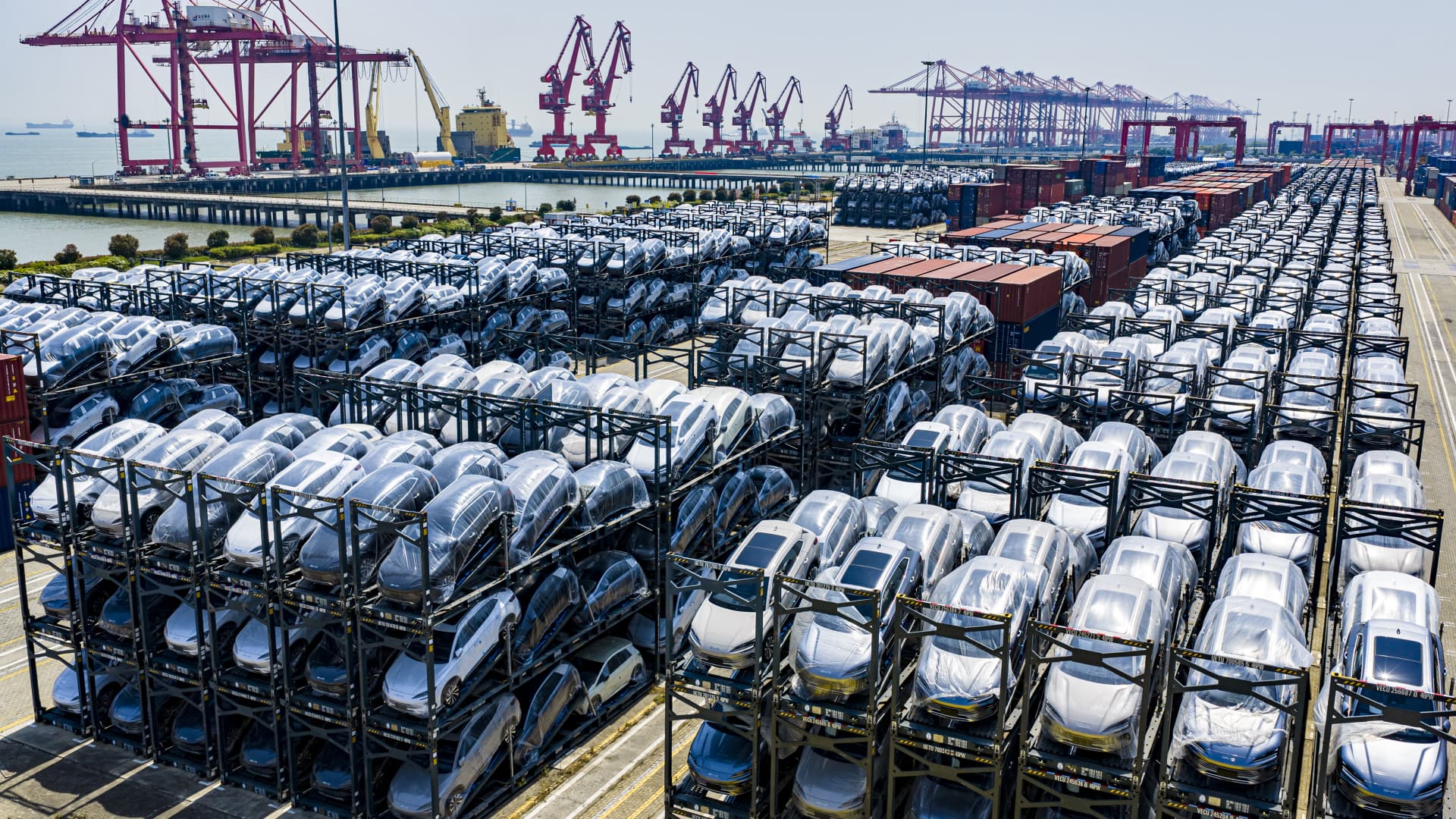
The quest for energy independence and national security has put battery production squarely in the spotlight for the United States. As electric vehicles (EVs) and renewable energy storage rapidly become cornerstones of the modern economy, the U.S. finds itself in a precarious position: heavily reliant on China for the critical components and manufacturing capabilities that power this green revolution. While Washington has outlined ambitious plans to reshore and diversify its battery supply chain, the journey is fraught with formidable obstacles, highlighting the immense challenge of disentangling from China's deeply entrenched dominance.
China's Unrivaled Dominance: A Pervasive Supply Chain Grip
China's strategic foresight and aggressive investment over the past two decades have cemented its position as the undisputed global leader in the battery supply chain. Its control extends far beyond mere assembly plants; it encompasses every crucial stage, from the initial extraction of raw materials to the sophisticated processing and manufacturing of battery cells.
- Raw Materials: While lithium, cobalt, and nickel are sourced globally, a significant portion of their refining and processing takes place in China. For instance, China refines a vast majority of the world's lithium and cobalt, essential for high-performance batteries.
- Component Manufacturing: Key battery components like cathodes, anodes, and separators are predominantly produced in Chinese factories, offering unparalleled economies of scale and cost efficiency.
- Cell Production: Chinese companies like CATL and BYD dominate global battery cell manufacturing, supplying major automakers worldwide. This established infrastructure provides a considerable competitive advantage.
This comprehensive control means that even if raw materials are mined elsewhere, they often pass through Chinese hands for processing before reaching manufacturers. This intricate web makes any rapid shift incredibly difficult.
The Hurdles to Domestic Production: A Mountain of Challenges
Raw Material Scarcity and Processing Bottlenecks
One of the primary challenges for the U.S. is securing a stable, ethical, and domestically processed supply of critical minerals. While the U.S. does possess some mineral reserves, developing new mines is a lengthy and expensive process, often facing environmental opposition and complex permitting regulations. Furthermore, the specialized facilities for refining these minerals to battery-grade quality are largely absent in the U.S., necessitating massive investments and years of development.
The Cost Conundrum and Economies of Scale
China's mature battery industry benefits from significant economies of scale, lower labor costs, and a streamlined regulatory environment, allowing it to produce batteries at prices the U.S. currently struggles to match. Building a competitive domestic industry from the ground up requires substantial upfront capital, skilled labor, and time to achieve similar efficiencies. U.S. manufacturers face higher labor costs, stricter environmental standards, and the immense task of establishing a completely new ecosystem.
Permitting, Environmental Concerns, and Labor
The U.S. regulatory landscape, while vital for environmental protection, often poses significant hurdles for new industrial projects. The permitting process for mines and processing plants can take years, if not decades, compared to much shorter timelines in some competitor nations. Additionally, attracting and training a skilled workforce for highly specialized battery manufacturing roles is a considerable undertaking. The expertise required across the entire value chain, from chemical engineers to skilled technicians, is not readily available at the scale needed.
U.S. Countermeasures and Progress: Laying the Foundation
Recognizing the urgency, the U.S. government has launched several initiatives aimed at bolstering domestic battery production. The Inflation Reduction Act (IRA) and the CHIPS and Science Act are central to this strategy, offering significant tax credits, grants, and incentives for companies to manufacture batteries and process critical minerals within North America.
- IRA Tax Credits: The IRA provides substantial tax credits for EVs assembled in North America with batteries that meet certain domestic content requirements, incentivizing manufacturers to localize their supply chains.
- Strategic Investments: Billions of dollars are being channeled into projects across the supply chain, from new lithium extraction sites in Nevada and North Carolina to battery gigafactories being built by companies like General Motors, Ford, and Panasonic in states like Michigan, Kentucky, and Kansas.
- International Partnerships: The U.S. is also actively forging alliances with countries like Australia, Canada, and Chile, which possess critical mineral reserves, to diversify sourcing away from China and build more resilient supply chains.
- Technological Innovation: Investments in R&D are aimed at developing next-generation battery technologies that might reduce reliance on some scarce minerals and improve manufacturing efficiency, potentially leapfrogging existing Chinese advantages.
These efforts are beginning to yield results, with a flurry of announcements for new factories and processing plants across the U.S. However, the scale of investment and the timeline for these projects to come online underscore the long road ahead.
The Road Ahead: A Decades-Long Endeavor
Reducing reliance on China for batteries is not a short-term fix but a decades-long strategic endeavor. While progress is being made, the U.S. must contend with China's deeply ingrained advantages, which have been cultivated over many years. The geopolitical stakes are immense; controlling the future of battery technology and production is intertwined with economic competitiveness, national security, and the pace of the global energy transition.
Success will hinge on sustained government commitment, continued private sector investment, technological breakthroughs, and effective workforce development. It also requires a delicate balance of competition and, where necessary, cooperation on global supply chain issues. The goal isn't necessarily to become entirely self-sufficient, but rather to build a diversified and resilient supply chain that reduces single points of failure and enhances strategic autonomy.
Conclusion
The U.S. ambition to reclaim its footing in the global battery landscape is a testament to the strategic importance of this industry. While the headwinds from China's established dominance are strong, the concerted efforts by government and industry are laying the groundwork for a more independent and secure energy future. The coming years will be critical in determining whether these foundational steps can truly transform America's position in the global battery race.
Login to leave a comment.