


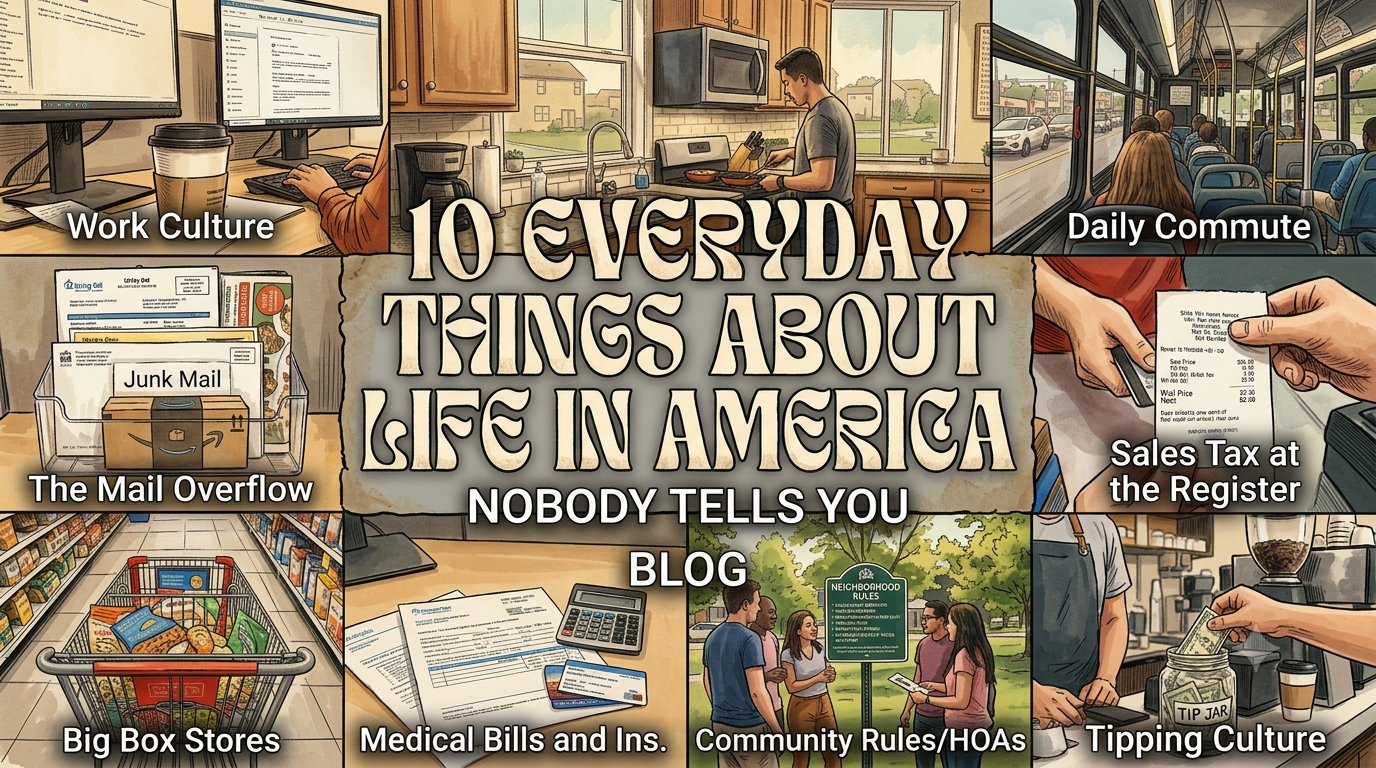
Ask anyone who has recently moved to the United States what caught them off guard, and the answer is rarely the big stuff. Nobody is truly shocked that the country is huge or that English comes in a dozen different accents. What throws people off are the small, everyday things: a cashier who asks how your day is going and doesn't wait for the answer, a phone that rings all afternoon with numbers you don't recognize, a rental form that wants a "credit score" before it will even look at you. These details rarely make it into travel guides, because they feel too ordinary to write down. This post collects ten of them. Some will make you smile, some will save you money, and a few will spare you an awkward moment. Whether you're visiting for a few weeks, moving for work or study, or just curious how life really runs over there, these are worth knowing before you land.
1. "How Are You?" Is a Greeting, Not a Question
The first surprise usually arrives within minutes of walking into a shop. The cashier smiles and asks, "Hi, how are you today?" You start explaining that you're a bit jet-lagged, and by then they've already moved on to scanning your items. That isn't rudeness. In the US, "How are you?" does the same job that "Hello" does in many other places. The expected reply is short and cheerful, something like "Good, thanks, you?", and that's the whole exchange.
The same habit shows up in other phrases. People say "We should get lunch sometime" and mean it warmly, but it isn't always a real invitation. When someone genuinely wants to meet, they usually suggest a day or a place. "Have a good one," "Take care" and "Let's catch up soon" all belong to the same gentle category of friendly noise.
- Small talk with strangers is normal. Waiting in line, riding an elevator or walking a trail, people will comment on the weather, a game or your jacket.
- Personal space matters. About an arm's length is the comfortable distance, and standing very close in a queue feels intrusive.
- "What do you do?" is an early question. It means your job, not your family, and it's a standard way to start a conversation.
- Some topics are best left alone with new people. Salary, age, weight, religion and politics can make a friendly chat go quiet fast.
Friendliness comes easily, but close friendships take longer. People are quick to smile and slow to let you into their weekends, so don't read the polite distance as dislike.
2. The Pharmacy Is Half a Supermarket
Walk into a CVS or Walgreens and you may forget you came for medicine. Alongside the prescription counter you'll find greeting cards, snacks, cosmetics, phone chargers, school supplies, photo printing and sometimes frozen food. These chains sit on corners in almost every town, and many stay open late. For plenty of people, the pharmacy is the closest shop that's still open at nine at night.
The medicine rules feel different too. Some things sold over the counter in other countries need a prescription in the US, and antibiotics are the best-known example. You can't just walk in and ask for a course of tablets. You need to see a doctor first, which means an appointment and a bill, so it's worth remembering when you're deciding what to pack.
- Names change. Paracetamol is called acetaminophen (often sold as Tylenol), and many familiar brands simply don't exist there.
- Vaccines are often available at the pharmacy. Flu shots and several other routine vaccines can be given by pharmacists, usually without a long wait.
- Prices vary wildly. The same prescription can cost very different amounts depending on your insurance and the store, and discount cards or apps sometimes beat the insured price.
- Bring your own supplies if you take regular medication. Carry it in the original packaging with a doctor's note, especially when you fly.
A quick tip for visitors: if you get a mild cold or a headache, the pharmacy aisle is usually the cheapest and fastest first stop. Just read the dosage labels carefully, because strengths can differ from what you're used to.
3. Your Credit History Follows You Everywhere
In many countries, a bank statement and a job letter are enough to rent a flat or sign up for a phone plan. In the US, a lot of doors are opened by a three-digit number called a credit score, typically somewhere between 300 and 850. It's built from your record of paying bills and loans, and it's tracked by three major agencies: Equifax, Experian and TransUnion.
Someone arriving from abroad starts with no history at all, and that can be surprisingly awkward. Landlords may ask for a bigger deposit or a co-signer. A phone company may want money upfront. Some utilities charge a deposit until you've shown you pay on time. It isn't personal, it's just how the system reads a blank file.
The way out is to build a record gradually:
- Get a starter or secured credit card. A secured card takes a deposit that becomes your limit, and it's designed for people with no history.
- Use it lightly and pay in full each month. Carrying a balance means paying steep interest, often above 20 percent a year.
- Pay everything on time. Late payments do more damage than almost anything else and stay on your record for years.
- Check your report once in a while. Errors do happen, and you can review your reports for free through the official channels.
It takes several months before a score appears and a couple of years before it looks strong. If you're planning a move, start this early rather than waiting until you need to rent a home.
4. Returns Are Easy, and Everyone Uses Them
One of the most pleasant surprises for new arrivals is how relaxed American stores are about returns. Bought a jacket that doesn't fit? Bring it back with the receipt, usually within 30 days, and many shops will refund the full amount without asking why. Costco is famous for taking back items long after purchase, and online retailers like Amazon often let you send things back for free or drop them at a nearby location.
This changes how people shop. Buying two sizes and returning one is normal. Trying an expensive gadget for a week before deciding is not seen as shady. Retailers accept a certain amount of returns as part of doing business, and shoppers treat the policy as a safety net.
There are limits, though, and they're worth checking before you buy:
- Keep the receipt or the confirmation email. Without it you may only get store credit.
- Look at the return window. Some stores allow 90 days, some only 14, and electronics often have tighter rules.
- Watch for restocking fees. Certain electronics, furniture and special-order items carry a charge for sending them back.
- Holiday purchases usually get extended windows, which is why January is full of people standing in line with gift boxes.
For a traveler, this matters too. If you buy something in a US shop and it turns out to be wrong, you can often fix that in a day or two. Just do it before your flight home rather than after.
5. Your Driver's License Is Your Everyday ID
In a country with no single national ID card, the driver's license does most of the work. It's what you show to buy alcohol, open a bank account, pick up a package, check into a hotel, board a domestic flight or prove your age at a bar. Even people who never drive usually get a state ID card from the Department of Motor Vehicles, known as the DMV, for exactly this reason.
The DMV itself has a reputation. Lines can be long, appointments can be booked weeks ahead, and each state runs its own office with its own rules and paperwork. Moving from one state to another means updating your license, and the deadline is often a month or two after you arrive. If you plan to drive as a new resident, expect a written test, sometimes a road test, and proof of your address.
- Visitors can usually use their home license for a short stay, and an International Driving Permit is a helpful companion in many states.
- Every state sets its own rules, so the process in Texas can look different from the one in New York.
- Domestic flights need acceptable ID. A passport always works, while a state license needs to meet the federal "REAL ID" standard.
- Carry a photo ID at all times. Even people who look well over 21 get asked for one at bars, and a photocopy of your passport won't be accepted in many places.
Book a DMV appointment online if the office allows it. Turning up unannounced can eat a whole morning.
6. Your Phone and Mailbox Get Very Busy
Within days of getting a US phone number, you'll notice something: it rings a lot. Robocalls are a real nuisance, from recorded messages about your car's warranty to fake calls claiming to be from a bank or a government agency. Most people don't answer numbers they don't know, and calls from unsaved contacts often go straight to voicemail. Legitimate businesses and doctors' offices usually leave a message or send a text, so it's fine to let unknown calls ring out.
Scam calls are more than an annoyance. Genuine tax agencies and immigration offices don't phone you demanding payment in gift cards or cryptocurrency. If someone insists you must pay right now or face arrest, it's a scam, and you can simply hang up.
The physical mailbox is busy too. Once your name is on a lease or a bank account, you'll get a steady flow of catalogs, coupons, pre-approved credit card offers and flyers. Most of it goes straight into the recycling.
- Packages are left at your door. Delivery drivers often drop parcels on the porch or in a lobby, and stolen deliveries, sometimes called "porch piracy," are a genuine problem in some areas.
- Parcel lockers and pickup points are a good option if you're out all day.
- Texting is the default for many appointments, deliveries and even quick business questions.
- Set up mail forwarding when you move so important documents don't end up with the previous tenant.
7. Trash Day, Lawns and the Neighbors' Rules
Life in a house or a managed community comes with a set of unwritten and written rules that visitors rarely hear about. The most visible one is trash day. Garbage and recycling are usually collected once a week from the curb, and you're expected to wheel your bins out the night before and bring them back afterward. Miss the truck, and your trash sits for another week.
Recycling rules differ from town to town. One city may want everything in a single bin, another asks you to separate glass, and some accept plastics that the next town rejects. It's worth reading the local guide, because a bin with the wrong items can be left unemptied with a tag on it.
Then there are lawns. In many suburbs, a tidy front yard is close to a civic duty. Tall grass can earn you a warning letter or a fine from the city, and mowing is a common weekend chore. Living somewhere with a homeowners association, known as an HOA, adds another layer.
- HOAs charge monthly or yearly fees for shared maintenance, and they set rules on things like paint colors, fences, parked vehicles and garden sheds.
- Noise has hours. Most towns expect quiet late at night, and apartment leases often spell out when music and parties should stop.
- Parking is regulated. Some streets need permits, and cars left in the wrong spot can be towed at your expense.
- Fireworks are limited in many places, even on holidays when they seem to be everywhere.
A simple rule works well: when you move in, ask the landlord or a neighbor what the local expectations are. People are usually glad to explain.
8. Small Fees and Subscriptions Add Up Quietly
Much of American consumer life runs on recurring charges. Streaming services, music apps, cloud storage, gym memberships, delivery memberships, software licenses and mobile apps all bill monthly. Individually they look cheap, at $5, $10 or $15. Together, a household can easily spend a few hundred dollars a month without noticing.
Free trials deserve special caution. Many sign-ups ask for a card upfront and convert to a paid plan automatically. If you forget to cancel, the charge arrives, and canceling is sometimes deliberately awkward. A calendar reminder set for the day before a trial ends can save real money.
Hidden fees are their own category:
- Bank fees. Some accounts charge a monthly maintenance fee unless you keep a minimum balance or set up direct deposit, and using an out-of-network ATM often costs $3 or more.
- Ticket and delivery fees. Concert tickets, food delivery and online orders can add service or convenience charges that appear only at the final step.
- Hotel "resort" fees. Some hotels add a daily charge for amenities you may not use, and it often isn't included in the advertised rate.
- Late fees and overdrafts. A missed due date or an overdrawn account can trigger charges that arrive quickly.
Once a month, scroll through your bank or card statement line by line. It takes ten minutes and almost always turns up something you forgot you were paying for.
9. The Holiday Calendar Shapes the Whole Year
Holidays in the US aren't just days off. They change how streets look, how stores are stocked and how people travel. Walk through a neighborhood at the end of October and you'll see houses covered in fake cobwebs, carved pumpkins and inflatable ghosts for Halloween, followed by children going door to door for candy. A few weeks later, the fourth Thursday of November brings Thanksgiving, one of the busiest travel periods of the year as families cross the country to share a big meal.
The day after is Black Friday, the start of holiday shopping season, when stores run heavy discounts and lines form early. December turns entire streets into light displays, and many workplaces slow down until the new year. Summer has its own markers: Memorial Day weekend opens the barbecue season, and the Fourth of July fills the sky with fireworks and the roads with travelers.
- Long weekends are prime travel time. Flights, hotels and rental cars cost more, and roads get crowded.
- Many shops close or shorten hours on Thanksgiving and Christmas Day, so plan your groceries ahead.
- Super Bowl Sunday in early February acts almost like an unofficial national holiday for food and gatherings.
- Other traditions are growing in visibility. A few school districts, including New York City's, now close for Diwali, and cultural festivals from Lunar New Year to Eid are increasingly marked in big cities.
If you're visiting during a major holiday, book early and expect crowds. If you're living there, learn the local school and work calendar, since it often dictates when you can take time off without paying peak prices.
10. The Weather Is Serious Business
Weather talk isn't just small talk in the US. The country covers deserts, mountains, plains, swamps and subarctic regions, and the conditions can be genuinely dramatic. Your phone may suddenly emit a loud alert sound telling you about a flash flood, a tornado warning or a nearby wildfire. That's normal, and it's worth taking seriously rather than silencing.
Different regions come with different risks. The central plains see the most tornadoes, the Gulf and Atlantic coasts face hurricanes from roughly June to November, the Northeast and Midwest get blizzards and ice storms, and parts of the West deal with wildfire smoke and extreme heat. Heat waves in southern states can be dangerous, and summer humidity in the Southeast catches many newcomers off guard.
- Learn "watch" versus "warning." A watch means conditions could produce a storm, while a warning means it's happening or about to, and you should act.
- Snow days are real. Schools, offices and even highways can shut down after heavy snowfall, particularly in areas that don't get much of it.
- Daylight saving time moves the clocks forward on the second Sunday of March and back on the first Sunday of November, which changes sunset times noticeably.
- Keep a small emergency kit with water, a flashlight and a phone charger if you live in a storm-prone area.
Before you plan a trip, check the seasonal risks for your destination. A summer visit to Florida and a winter visit to Minnesota are two very different experiences, and packing for both would be a mistake.
Quick Recap: 10 Everyday Things at a Glance
| Everyday Thing | What to Remember |
| "How are you?" | A greeting. Answer briefly and keep moving. |
| Pharmacies | Part shop, part clinic. Antibiotics need a prescription. |
| Credit history | Start building it early with a starter card. |
| Returns | Easy, but keep receipts and check the window. |
| Driver's license | The everyday ID. Carry it always. |
| Phone and mail | Ignore unknown callers. Secure your packages. |
| Trash and neighbors | Follow local bin, lawn and HOA rules. |
| Fees and subscriptions | Review your statement every month. |
| Holidays | Book early and expect crowds and closures. |
| Weather | Take alerts seriously. Know your region's risks. |
Final Thoughts
None of these ten things is dramatic on its own. You won't find them on a list of famous landmarks or in a glossy brochure. But together they explain a lot about how ordinary days work in America: a country that is friendly on the surface and systematic underneath, where convenience is everywhere and small details quietly decide how smooth your week feels.
Most people adjust faster than they expect. After a few weeks, the polite "How are you?" stops feeling odd, you learn which calls to ignore, you know what day the trash goes out, and you start checking your statement without being told to. If you go in knowing these ten things, you're already a step ahead of most people who arrive there for the first time.
Login to leave a comment.