


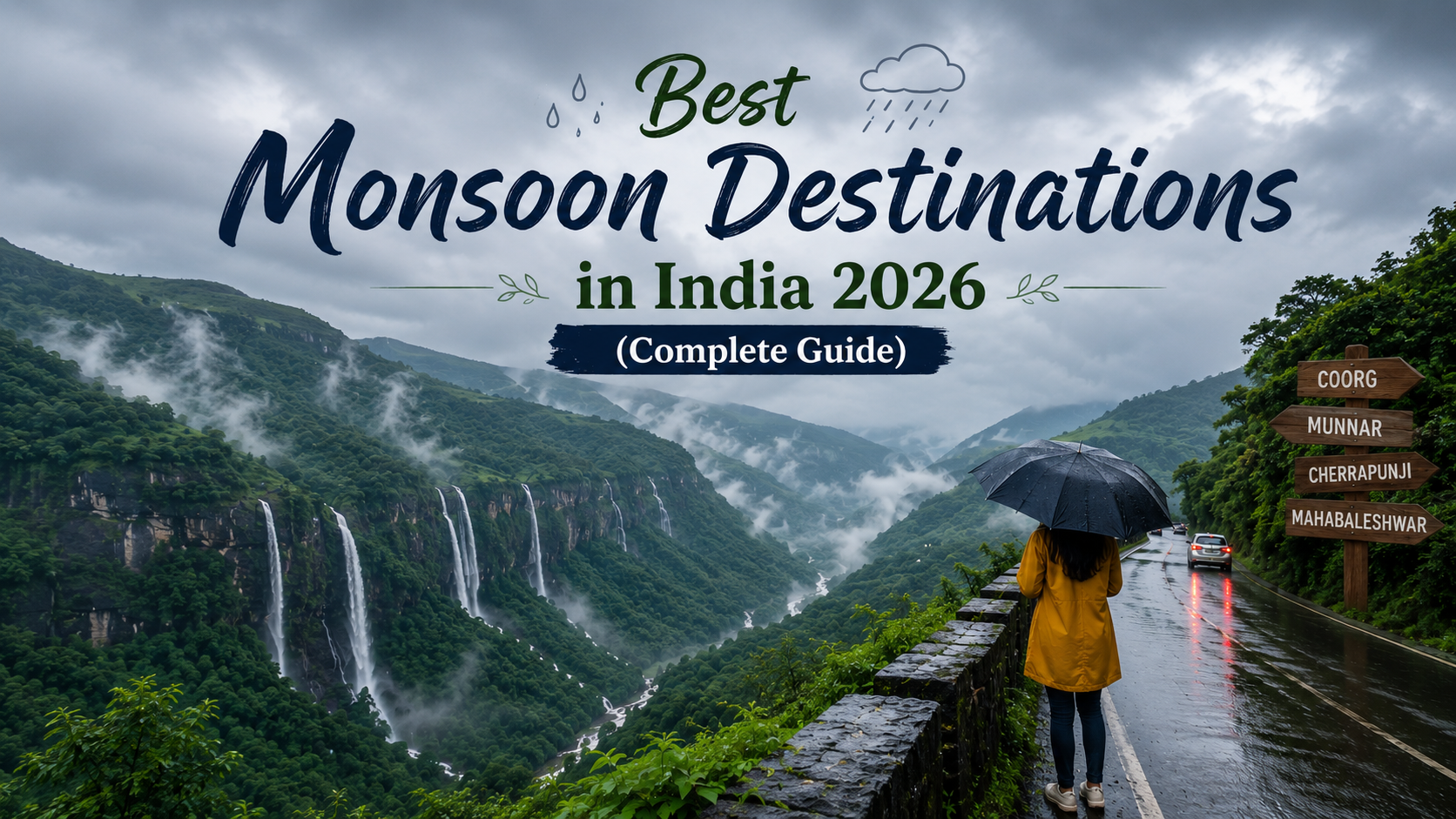
There's a very specific kind of person who checks the weather forecast, sees "heavy rainfall expected," and immediately opens a travel booking app instead of cancelling plans. If that's you, welcome. If that's not you yet, give me 2500 words and I'll try to convert you.
Most people treat monsoon as the off-season. Hotels drop their prices, tour operators go quiet, and everyone waits for October to "start traveling again." Which, honestly, is a bit of a waste, because some places in India don't just tolerate the rain - they were basically built for it. The waterfalls show up only now. The hills turn a green that doesn't exist in any other month. The crowds vanish, and suddenly you're not fighting for a photo spot with forty other people holding the same phone at the same angle.
I've put together a list of nine places that I think make the strongest case for monsoon travel in India. Some are obvious, some maybe less so, but all of them have a "you had to be there in July or August" quality that no summer or winter trip can replicate.
Coorg, Karnataka
Coorg in the monsoon is a completely different animal from Coorg in December. The coffee plantations, which already look good year-round, turn into this dense, dripping green that smells like wet earth and coffee blossoms at the same time - genuinely one of the better smells you'll encounter on a trip anywhere.
The Abbey Falls, which can look a bit tame in dry months, becomes a proper roaring waterfall once the rains hit. Same with Iruppu Falls near the Tamil Nadu border, tucked inside the Brahmagiri hills, which turns into a full sensory experience - the sound alone tells you the rain has been serious this year.
What I'd actually recommend is skipping the checklist of "top 10 spots in Coorg" and just staying at a homestay on a plantation for two or three days. Wake up, walk through the estate while it's misty, drink filter coffee that was probably grown fifty feet from where you're sitting, and don't rush anywhere. Coorg rewards slow mornings more than it rewards long itineraries.
One practical note: roads can get slippery and landslide-prone in the deeper interior areas during peak monsoon (July especially), so check local conditions before heading to remote viewpoints, and avoid driving after dark on ghat roads.
Meghalaya
If there's one entry on this list that isn't just "good in monsoon" but is defined by monsoon, it's Meghalaya. The name literally translates to "abode of clouds," and Cherrapunji and Mawsynram in this state hold records for being among the wettest inhabited places on Earth. This is not a place you visit despite the rain - the rain is the whole point.
The living root bridges near Nongriat, grown over decades by the Khasi tribes by training the roots of rubber fig trees across rivers, are at their most dramatic when the water below is rushing hard. Yes, the trek down (and the climb back up - don't underestimate those steps) is more demanding when everything's wet, but the double-decker root bridge with a swollen river underneath it is a sight you won't get any other season.
Then there's Nohkalikai Falls, one of the tallest plunge waterfalls in India, which genuinely looks unimpressive in peak summer and absolutely thunderous by August. Dawki, with its supposedly crystal-clear river, is better visited slightly outside the heaviest rain weeks since monsoon runoff can cloud the water - so time that part of the trip carefully.
Shillong itself is a nice, relaxed base with its cafes and music scene, and it makes a good buffer for the days when you just want to sit somewhere warm with a coffee and watch the clouds roll through the valley below.
Mahabaleshwar, Maharashtra
Mahabaleshwar during monsoon has a bit of a cult following among people from Pune and Mumbai, and once you've been there in July, you get why. This hill station, sitting in the Western Ghats, essentially disappears into fog for stretches of the day, and the valleys around it fill up with waterfalls that don't exist the rest of the year.
Lingmala Falls and Chinaman's Falls both come alive properly, and the famous viewpoints - Arthur's Seat, Elephant's Head Point, Wilson Point - take on this moody, layered look where you can watch entire cloud banks move across the valley below you in real time. On a clear-ish window between rain showers, the visibility can genuinely surprise you.
A word of caution that doesn't get said enough: several viewpoints have sheer drops, and during heavy rain the ground gets slick. Stick to the marked areas, especially with kids or elderly folks in the group, and skip the viewpoints entirely if there's a thunderstorm warning.
Also, strawberries are technically a summer crop here, so if you're going for the berries specifically, that's a different season - but the local markets still sell preserves, jams, and the famous Mapro products year-round, so you're not missing out entirely.
Munnar, Kerala
Kerala's tourism department isn't wrong to push "God's Own Country" as a monsoon destination, and Munnar is probably the clearest example of why. The tea estates here are already photogenic in any weather, but with monsoon clouds settling into the folds of the hills, the whole landscape gets this layered, almost painted quality.
Attukad Waterfalls and the three-tiered Lakkam Falls are both significantly more impressive with a full monsoon feeding them, and Eravikulam National Park (home to the Nilgiri tahr, an endangered mountain goat found only in these hills) has its own quieter charm when the grasslands are lush and green rather than the yellowed grass you get in peak summer.
One thing worth knowing - the neelakurinji flower, the one that blooms once every twelve years and turns entire hillsides blue-purple, isn't a monsoon-specific event, so don't plan a trip around chasing it unless you've checked the actual bloom cycle (the last major bloom was 2018, so the next one's still some years off).
Practically speaking, book your homestay or resort with a good view in advance - monsoon in Munnar is popular enough now that the good properties with valley views fill up faster than people expect for an "off season."
Lonavala, Maharashtra
Lonavala is the classic Mumbai-Pune monsoon weekend trip, and there's a reason half of Maharashtra tries to go there the moment the first proper rain hits. It's close, it's dramatic, and it delivers exactly what people want from a rainy getaway without requiring a long journey.
Bhushi Dam is the most famous (and most crowded) spot - people literally go to sit on the dam steps and let the overflow water rush over them, which is fun in a chaotic, everyone's-laughing kind of way, but it does get packed on weekends, so go on a weekday if you can. Tiger's Leap and Lion's Point offer that classic "clouds below your feet" view, and the Kune Waterfalls, one of the highest in the region, are worth the slightly longer detour.
If you want something quieter than the Bhushi Dam scene, Lonavala also has smaller, less-photographed spots - ask locally about Bhambhurde or the walk toward Rajmachi Fort, which combines a bit of trekking with fort ruins and a much calmer atmosphere.
Safety-wise, this is the one place on the list where I'd actively caution people: every year there are unfortunate incidents at dams and waterfalls here because of people getting too close to overflow points or swimming in swollen streams. It's genuinely not worth the risk for a photo. Enjoy it, but keep some distance.
Goa
Monsoon Goa surprises a lot of people who only know the beach-party version of the state. From roughly June to September, most of the big commercial beach shacks shut down (the sea gets rough and dangerous for swimming, so this is for good reason), but what shows up instead is a version of Goa that feels older and more local.
The Western Ghats sections of Goa - around Dudhsagar Falls, which becomes an absolute monster of a waterfall during monsoon, or the Bhagwan Mahavir Wildlife Sanctuary - turn genuinely spectacular. Old Goa's Portuguese-era churches, like Basilica of Bom Jesus, look moodier and more atmospheric against grey monsoon skies than they do under harsh summer sun.
Prices for hotels and flights drop noticeably, the famous Goan lanes in Fontainhas and Panjim are quieter, and if you're someone who actually wants to explore local markets, cafes, and spice plantations without elbow-to-elbow crowds, this is your window.
Just don't go expecting a swimming-and-sunbathing beach holiday - the sea is genuinely rough and several beaches put up red flags for swimming during peak monsoon months. Go for the green Goa experience, not the beach-chair one.
Sikkim
Sikkim is one of those states that a lot of monsoon lists skip because parts of it get logistically tricky during heavy rain - some higher passes and certain routes toward North Sikkim can shut due to landslides. But the parts that remain accessible are worth the trip on their own.
Gangtok stays lively through the monsoon, and areas like Ravangla and Pelling offer incredible views when the clouds occasionally part to reveal Kanchenjunga, the third-highest mountain in the world. The Rhododendron sanctuaries and orchid gardens around the state are actually timed well with parts of the monsoon season, and Sikkim has hundreds of orchid species, several of which bloom through the rainier months.
The honest advice here: build flexibility into a Sikkim monsoon itinerary. Don't lock yourself into a rigid day-by-day plan that depends on specific roads being open, because landslide-related delays are a real possibility in this region during heavy rain spells. A guide or local travel operator who can adjust routes on the fly is worth the money here more than in most other places on this list.
Coonoor, Tamil Nadu
Coonoor tends to live in Ooty's shadow, which is honestly a bit unfair, because it often ends up being the more peaceful choice of the two for monsoon travel. It's part of the same Nilgiri hill range, sits at a slightly lower altitude than Ooty, and has fewer of the crowds that pile into Ooty's lake and gardens every weekend.
Lamb's Rock and Dolphin's Nose are the well-known viewpoints, and both look dramatically different with monsoon mist rolling through the valley compared to a clear-sky day. Sim's Park, a botanical garden originally laid out in the late 1800s, feels particularly good in light rain - it's not a spot you want during a downpour, but a drizzly walk through it is lovely.
Coonoor is also home to some of the older tea estates in the Nilgiris, and a few of them - Highfield Tea Estate is one example - run tours where you can actually see the tea-making process. Doing that on a misty, rainy afternoon with a hot cup of Nilgiri tea afterward is a small pleasure that's hard to overstate.
If you're doing a Nilgiris trip, honestly consider basing yourself in Coonoor and doing a day trip to Ooty, rather than the other way around. You'll get calmer evenings and still see everything you came for.
A Few Honest Notes Before You Book Anything
Monsoon travel in India isn't zero-risk, and I'd rather say this plainly than dress it up. Landslides are a genuine concern in several of these hill regions Coorg, Munnar, Sikkim, and parts of the Western Ghats near Lonavala and Goa all see landslide activity in peak monsoon months (roughly July and August tend to be the heaviest). Always check local weather advisories a day or two before you travel, especially if you're driving yourself on ghat roads.
Waterfalls and swollen rivers look incredible from a safe distance and are genuinely dangerous up close. Every single year, there are avoidable accidents at popular waterfall and dam spots because people get too close to the edge or try to swim in fast-moving water. Enjoy the view, keep the distance.
Pack smart - a decent rain jacket beats an umbrella in windy hill areas, quick-dry clothing is your friend, and a dry bag or ziplock for your phone and documents is not optional, it's basic sense. Footwear matters more than people think; trekking sandals or shoes with real grip will save you from more slips than you'd expect.
And build slack into your itinerary. Monsoon travel, more than any other season, rewards people who aren't in a hurry. Roads get delayed, buses run late, that one waterfall trek might get called off for the day because of a landslide warning. The people who enjoy monsoon trips the most are usually the ones who treat the itinerary as a rough guide rather than a contract.
Login to leave a comment.